
Sump pump maintenance protects your basement when water rises fast. It works hard during storms, snowmelt, and wet seasons. You need simple checks before water becomes damage. This guide shows what to inspect, clean, and test. Advantage Plumbing Plus helps Central Wisconsin homeowners keep basement water problems under control with practical service, clear advice, and reliable local plumbing support.
What Should You Know Before Checking Your Sump Pump?
A sump pump moves water out of your pit before it reaches your basement floor. Most systems use an electric pump, a float switch, a discharge line, and a check valve. Each part must work before heavy rain starts.
You should never wait until water enters your basement. In Central Wisconsin, spring thaw and strong storms can overload weak systems fast. Your pump may look fine during dry weather, yet fail during the first real test. Watch for strange sounds, slow pumping, rust, and poor discharge. If you need a stronger setup, you can plan a better basement drainage upgrade before the next wet season arrives.
How Does Sump Pump Maintenance Protect Your Basement?
A good checkup helps you find small problems early. It also helps your pump run when storms hit. You should test the float, clean the pit, check the discharge path, and look for worn parts.
- Float Switch: Make sure it rises and falls without sticking.
- Power Supply: Confirm the outlet and breaker work correctly.
- Discharge Line: Check that water moves away from your home.
- Pit Cleaning: Remove grit, mud, and loose debris.
- Pump Sound: Listen for grinding, humming, or heavy vibration.
I always tell homeowners to test before storm season. A quiet pump does not always mean a healthy pump. If water rises and the unit does not start, you may face flooding fast. If your basement also has slow drains or moisture issues, you can check nearby plumbing problems early before they add stress to the system.
What Parts Should You Inspect During a Pump Check?
Start with the visible parts first. Look at the cord, float, pit, lid, discharge pipe, and valve. Then pour water into the pit and watch the cycle. A working pump should start, remove water, and shut off cleanly.
| Part to Check | What You Should Notice |
| Float Switch | Moves freely without catching |
| Pit Basin | Holds no heavy sludge or debris |
| Discharge Pipe | Sends water away from the foundation |
| Check Valve | Stops water from flowing backward |
| Pump Body | Shows no heavy rust or cracks |
Good sump pump maintenance should also include deeper checks. Look for a clogged inlet screen, an obstructed impeller, or a faulty check valve. These issues can stop water movement even when the motor runs. You should also check for corrosion around metal parts, battery terminals, and fittings. Rust, odor, and weak flow often mean the system needs service soon.
What Are the Main Sump Pump Maintenance Steps?
Your pump needs a simple routine. You do not need to overcomplicate it. You need to test, clean, inspect, and confirm discharge. These steps reduce the chance of surprise basement water.
- Test the Pump: Pour water into the pit and watch it start.
- Clean the Pit: Remove mud, stones, and loose debris.
- Inspect the Valve: Make sure water does not flow backward.
- Check the Screen: Clear anything blocking the inlet area.
- Review the Outlet: Confirm power stays stable and safe.
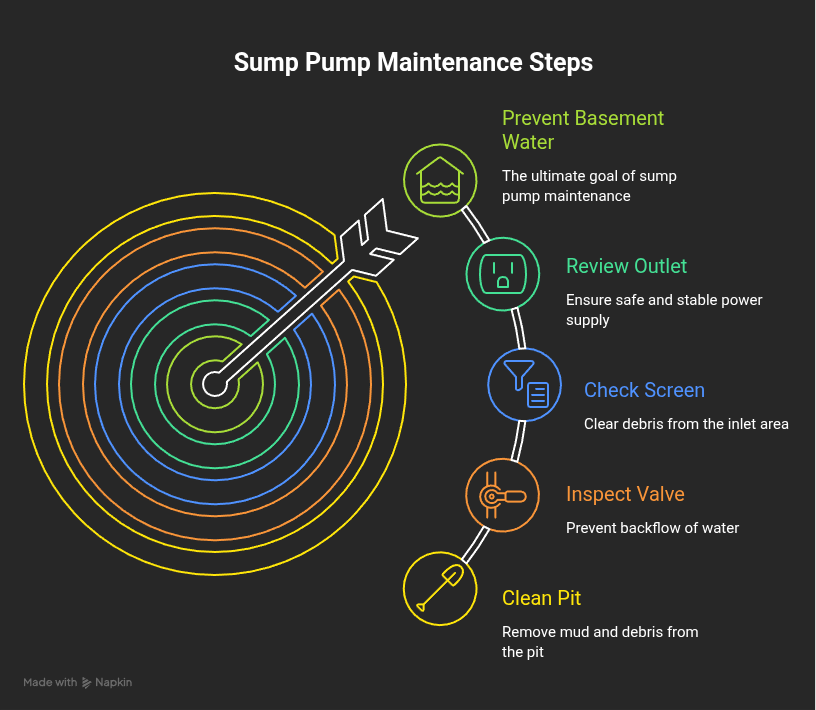
These steps matter because a sump pump fails quietly at first. You may not notice trouble until water rises. A quick check can reveal weak pumping, stuck float movement, or noisy operation. You should test more often during rainy months. You should also schedule professional sump pump maintenance if your pump runs often, handles heavy flow, or protects a finished basement.
How Often Should You Test the Pump?
You should test your pump before heavy rain seasons. You should also test it after long dry periods. A pump can sit unused for months, then fail when groundwater rises fast.
A simple water test gives you quick answers. Pour clean water into the basin until the float rises. The motor should start fast. The water should leave through the discharge line. Then the pump should shut off. If it hums, rattles, or runs without moving water, stop and call for help. That can point to an obstructed impeller, clogged line, or worn motor.
Which Pump Type Needs Different Care?
Different pump styles need different checks. Submersible sump pumps sit inside the pit and handle water directly. Pedestal sump pumps place the motor above the pit, so some parts stay easier to reach.
| Pump Type | What to Watch |
| Submersible Pump | Debris, rust, seals, and screen clogs |
| Pedestal Pump | Float arm, motor noise, and alignment |
| High-Capacity Pump | Heavy cycling and discharge strength |
| Backup Pump | Battery charge and test cycle |
| Older Pump | Rust, odor, and weaker performance |
Good sump pump maintenance should fit the pump you own. A high-capacity sump pump may protect a wetter home, but it still needs checks. A smaller pump may struggle during spring thaw or repeat storms. If your pump runs constantly, short-cycles, or cannot keep up, sizing may be wrong. The right pump should match your basement, drainage load, and water table.
How Should You Clean the Pit and Inlet Screen?
Unplug the pump before cleaning. Use a flashlight and gloves. Remove loose stones, mud, and grit from the basin. Then inspect the intake area for buildup, lint, or small debris.
You can clean safe surfaces with a vinegar and water mixture when grime collects inside the pit. Avoid harsh chemicals because they can damage parts. A clogged inlet screen can starve the pump and reduce water flow. After cleaning, reconnect power and test with water. Watch the pump start, drain, and stop. If flow stays weak, the impeller or discharge line may need service.
Why Does the Check Valve Matter So Much?
The check valve stops discharged water from running back into the pit. Without it, the pump may move the same water again and again. That wastes energy and causes extra wear.
- Backflow Control: A good valve keeps water moving one way.
- Pump Protection: Less repeat cycling helps reduce motor strain.
- Noise Reduction: A working valve can reduce loud pipe thumps.
- Flood Prevention: Better flow control lowers overflow risk.
- System Balance: The pump works less when discharge stays clear.
A faulty check valve can make your pump seem busy but ineffective. You may hear banging pipes or notice fast cycling. You may also see water return right after the pump shuts off. That issue can shorten pump life. During sump pump maintenance, always watch the water level after shutdown. If it rises again fast, the valve deserves attention.
When Should You Check for Corrosion or Rust?
You should check for corrosion during every seasonal review. Water, minerals, dirt, and age can wear pump parts down. Rust can show up on fittings, fasteners, battery terminals, and the pump housing.
Small rust spots may not mean failure. Heavy corrosion can signal trouble. It can weaken parts, block movement, or make service harder. If the pump smells bad, looks rusty, or sounds rough, it may be near the end of its life. Many pumps last for years, but they do not last forever. When your pump protects a finished basement, do not gamble with old equipment.
What Warning Signs Mean You Need Professional Help?
Some problems need more than a quick homeowner check. Call for help if your pump hums but does not move water. You should also call if it runs nonstop, trips breakers, smells hot, or cycles too often.
A plumber can check the float, motor, pit, discharge pipe, and valve. Professional sump pump maintenance also helps find hidden causes. Your pump may be fine, but the pipe may clog outside. The outlet may fail. The pit may sit too low or too small. A trained eye can save you from repeat flooding. It can also help you choose repair or replacement wisely.
What Do Homeowners Ask About Sump Pump Care?
How often should I do sump pump maintenance?
You should inspect your system at least once a year. Test it before storm season and spring thaw. If your pump runs often, check it more often.
What causes a clogged inlet screen?
A clogged inlet screen often comes from mud, gravel, lint, or pit debris. The screen blocks debris from entering the pump. Clean it carefully so water can enter freely.
What happens when the impeller gets blocked?
An obstructed impeller can stop water movement. The motor may run, but the pump may not drain well. You may hear humming, grinding, or vibration.
Are submersible sump pumps better than pedestal sump pumps?
Submersible sump pumps work well inside pits and run quieter. Pedestal sump pumps offer easier motor access. The better choice depends on pit size, water volume, and service needs.
When should I call for professional sump pump maintenance?
Call when your pump runs oddly, fails tests, or cannot keep up. You should also call before storm season if the system protects a finished basement. A pro can spot issues you may miss.
Should You Call Advantage Plumbing Plus for Sump Pump Maintenance?
You should call when your pump shows age, noise, weak flow, or repeat cycling. Our team can inspect your setup and help you prevent basement water damage.
Advantage Plumbing Plus serves Wausau and nearby Central Wisconsin areas. You get local service from licensed plumbing professionals who understand wet basements, spring thaw, discharge problems, and pump failure risks. We can repair, replace, or maintain your sump system before the next storm tests it.
- Company Name: Advantage Plumbing Plus, LLC
- Phone Number: 715-359-7473
- Website Link: https://advantageplumbingplus.com/