
Yard flooding can damage more than your lawn. Water can move toward your basement, garage, and foundation. An outside pump can move that water away fast. This guide helps you know when one makes sense. Advantage Plumbing Plus helps Central Wisconsin homeowners protect your yard and basement from water problems with smart planning, proper setup, and local drainage support.
What Should You Know Before Fixing Yard Drainage?
An Outdoor Sump Pump helps move standing water from low spots. It works outside your home, not inside your basement. It collects water in a basin, then pumps it away through a planned line.
This system can support yard flooding prevention when grading alone fails. It can also help with preventing water pooling near patios, walkways, driveways, and foundation walls. In Wisconsin, spring thaw and heavy storms can overwhelm soggy yards quickly. If water already reaches your basement or pit area, you may need to fix pump or drainage issues before storms hit.
How Does an Outdoor Sump Pump Work?
An outside pump uses a buried basin or pit. Water flows into that low area first. Then the pump sends water through a discharge line to a safer outlet area away from your home.
- Water Collection: The pit collects runoff from low yard areas.
- Pump Action: The unit turns on when water rises.
- Discharge Planning: The pipe carries water away from structures.
- Foundation Safety: Better flow supports home foundation protection.
- Flood Control: The system helps reduce muddy yard damage.
You should not guess the best location. Water always moves toward the lowest point. A poor pit location can make the pump work harder. It can also send water back toward your house. If drainage affects pipes, fixtures, or basement areas, you can review related plumbing concerns before they spread.
Why Does Water Pool Around Your Yard?
Standing water usually means the ground cannot move runoff fast enough. An Outdoor Sump Pump can help when low areas trap stormwater. It may also help when clay soil, poor slope, or blocked drainage keeps water near your home.
| Yard Problem | What It May Mean |
| Wet low spots | Water has no clear exit |
| Soft soil | The ground stays oversaturated |
| Basement seepage | Water may press near foundation walls |
| Standing driveway water | Surface slope may need support |
| Muddy lawn patches | Runoff may collect in weak zones |
Good water management starts with flow direction. Your pump, basin, and outlet must work together. You may also need downspout routing, trenching, or grading support. The easiest way to stop yard flooding is not always one product. It is the right drainage plan. That plan should move water away without creating trouble for your neighbor, sidewalk, septic area, or foundation.
When Is an Outdoor Sump Pump Better Than Basic Grading?
A pump makes sense when gravity drainage cannot finish the job. Some yards sit too flat. Some low spots sit below the best discharge area. Other homes collect roof runoff, driveway water, and lawn runoff in one place.
- Low Yard Area: A pump helps when water collects below the outlet.
- Flat Property: It moves water when slope gives little help.
- Heavy Runoff: It handles water from storms and snowmelt.
- Foundation Risk: It redirects water before pressure builds.
- Poor Soil Drainage: It supports yards with slow absorption.
The pump should not mask a bad drainage design. It should solve a clear water path problem. If the water source stays untreated, flooding may return. I always look for roof drains, soil grade, trench depth, and discharge distance. This helps you avoid short-term fixes. A strong plan supports home foundation protection and long-term yard flooding prevention.
What Should You Know About Sump Pit Setup?
A proper sump pit setup gives water a place to collect. The pit should sit lower than the trench or wet area. That lets water fall into the basin before the pump moves it away.
An Outdoor Sump Pump needs enough pit space around the unit. A tight hole can block pipe entry or trap debris. Large stone often works better than tiny chips near pump systems. Small stone can enter the pump and damage it. You should also plan safe access for cleaning. A buried system still needs service. Good setup helps protect performance during wet weeks.
How Should the Discharge Line Be Planned?
The discharge line decides where pumped water goes. It should carry water away from your home, not back toward it. A short, clear route helps the pump move water faster.
| Discharge Factor | Why It Matters |
| Pipe Length | Shorter runs reduce pump strain |
| Outlet Location | Water should exit safely downhill |
| Pipe Size | Proper sizing supports stronger flow |
| Freeze Risk | Wisconsin winters need smart routing |
| Debris Control | Clean lines reduce blockage risk |
A longer pipe run creates more resistance. That can slow water movement during heavy rain. The outlet should also avoid walkways, driveways, septic areas, and neighbor property. In cold climates, discharge design matters even more. Ice can block flow and force water backward. A good system supports water management in every season, not only during summer storms.
Can Tree Roots Cause Drainage Problems?
Tree roots can invade wet areas fast. They search for steady moisture. That is why tree root prevention matters near trenches, drain lines, and pump pits. Roots can clog lines or damage drainage paths over time.
An Outdoor Sump Pump should leave the trench as dry as possible after pumping. That lowers the chance of roots chasing trapped water. You should also keep large trees away from buried pipes when possible. Some homeowners search for shrug root prevention, but the real goal is shrub and tree root control. Better pipe placement, clean stone, fabric, and proper slope can all help.
Could the Pump Recirculate Lake Water?
Yes, poor depth planning can create that issue near lakes. If the pit sits too low, the system may draw water that never really leaves the area. That can make the pump run too often.
A setup near a lake, pond, or high groundwater area needs careful planning. You do not want to recirculate lake water all day. That wastes energy and adds wear. The pit depth, trench depth, and outlet point must match the property. This is where expert layout matters. A bad design can create endless pumping. A good design removes stormwater without chasing nearby water sources.
What Maintenance Does an Outside Pump Need?
An Outdoor Sump Pump needs seasonal checks. Dirt, leaves, grit, ice, and roots can affect performance. You should inspect the basin, lid, pump, float, outlet, and line before wet weather starts.
- Pit Cleaning: Remove leaves, mud, and grit from the basin.
- Float Testing: Make sure the pump starts and stops correctly.
- Line Check: Confirm the discharge path stays open.
- Root Review: Watch nearby plants and root growth.
- Winter Prep: Check that freezing will not block the outlet.
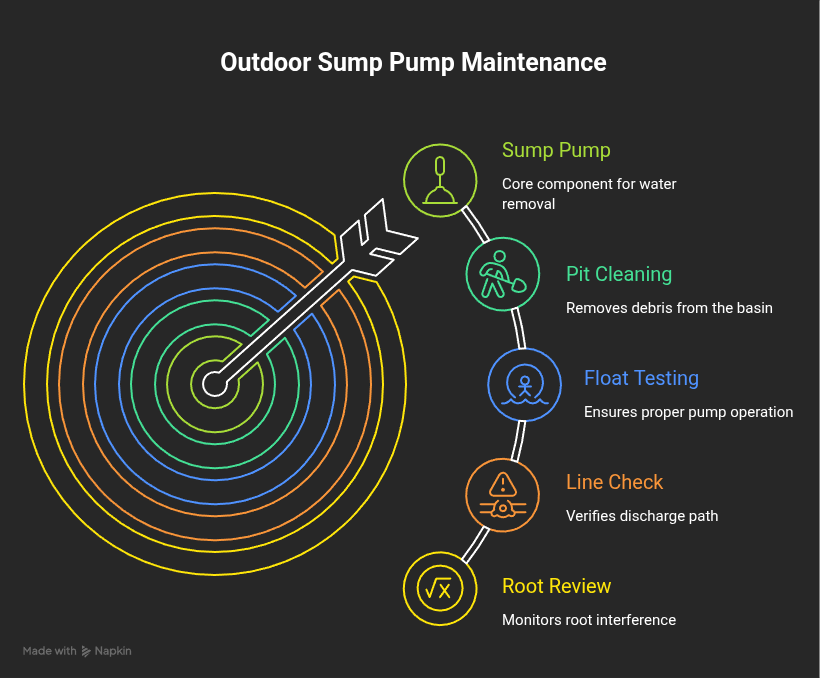
Outdoor systems face tougher conditions than indoor units. They sit near soil, grass, insects, roots, and weather. You should test them before spring thaw and heavy rain. If the pump runs often, inspect it more. A little care can prevent yard damage, basement seepage, and early pump failure.
Is an Outdoor Pump the Easiest Way to Stop Yard Flooding?
Sometimes, yes. Sometimes, no. The easiest way to stop yard flooding depends on why water collects. A pump helps when the yard has no natural low exit.
An Outdoor Sump Pump works best as part of a full drainage plan. You may also need catch basins, French drains, downspout routing, grading, or a better outlet. Do not choose a pump only because water looks bad. Find the source first. Roof runoff, poor slope, compacted soil, and blocked pipes can all create similar symptoms. A correct diagnosis saves money.
What Do Homeowners Ask About Outdoor Pump Systems?
What does an outdoor sump pump do?
It collects standing yard water in a pit. Then it pumps that water away through a discharge line. This helps reduce lawn flooding and foundation pressure.
Is an outdoor pump good for foundation protection?
Yes, it can support home foundation protection. It moves water away before it sits near walls. It works best with proper grading and discharge planning.
Where should the sump pit go?
The pit should sit near the lowest wet area. It should also stay close to the safe discharge point. A good sump pit setup reduces pump strain.
Can roots damage an outdoor drainage system?
Yes, roots can enter wet trenches and lines. Tree root prevention helps protect long-term drainage. Keep water moving and avoid poor pipe placement.
What is the easiest way to stop yard flooding?
The easiest way to stop yard flooding depends on the cause. Some yards need grading, while others need pumps or drains. A site review gives the best answer.
Should You Call Advantage Plumbing Plus for an Outdoor Sump Pump?
You should call when water pools near your yard, basement, garage, or foundation. Our team can review the problem and recommend a practical drainage plan.
Advantage Plumbing Plus serves Wausau and nearby Central Wisconsin areas. You get help from licensed plumbing professionals who understand stormwater, sump systems, discharge routes, and seasonal drainage problems. We can help you decide if a pump, repair, or better drainage setup fits your home.
- Company Name: Advantage Plumbing Plus, LLC
- Phone Number: 715-359-7473
- Website Link: https://advantageplumbingplus.com/