
Hot water affects your comfort every day. You use it for showers, dishes, laundry, and cleaning. The right system can lower stress and improve convenience. The wrong one can cause cold showers and high bills. Advantage Plumbing Plus helps Central Wisconsin homeowners choose the right water heater setup with honest advice, skilled installation, and practical long-term value.
What Should You Know Before Choosing a Water Heater?
A Tank vs Tankless Water Heater choice starts with your home. You need to look at family size, hot water habits, space, budget, and energy goals. Both systems can work well when sized correctly.
A tank model stores heated water for later use. A tankless model heats water as you need it. This is also called on-demand water heating. Your best choice depends on how many fixtures run at once. It also depends on your home’s gas, electric, and venting setup. If your current system leaks, rumbles, or fails often, you may need to fix water heater problems before they grow.
How Does a Tank vs Tankless Water Heater Compare?
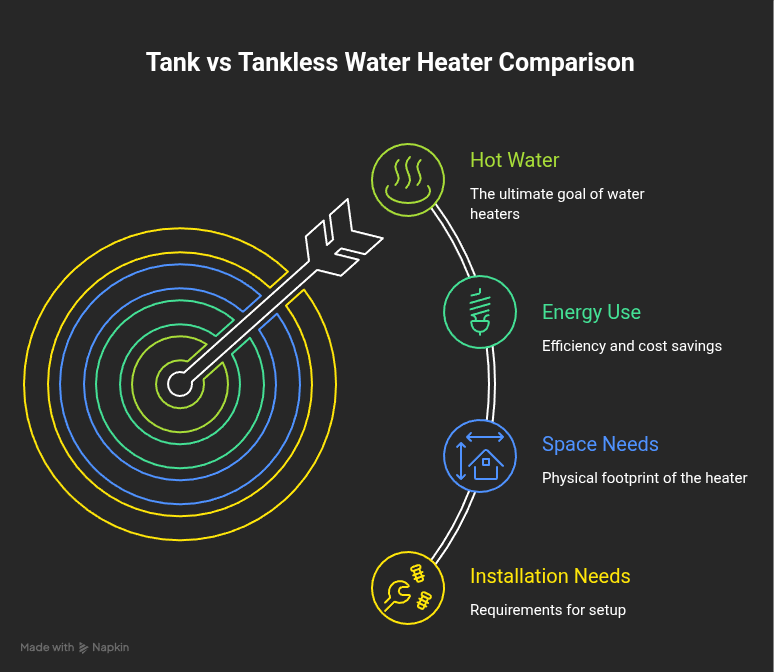
Tank water heaters hold hot water inside a storage tank. Tankless systems heat water only when you open a hot tap. That difference affects cost, comfort, energy use, and installation needs.
- Tank Storage: You get a ready supply of hot water.
- Tankless Flow: You get heated water as it moves through.
- Energy Use: Tankless systems reduce standby heat waste.
- Space Needs: Tank units need more floor space.
- Install Needs: Tankless upgrades may need special planning.
In my experience, many homeowners focus only on the unit price. That can lead to a poor choice. A cheaper tank may fit your budget now. A tankless unit may save more over time. If plumbing layout or old pipes affect hot water delivery, you can review nearby plumbing concerns before installation and avoid future problems.
Why Does Hot Water Usage Matter So Much?
Your daily hot water pattern matters more than the label. A Tank vs Tankless Water Heater decision changes when you run showers, laundry, and dishes at the same time. Heavy use can drain a tank or overwhelm a small tankless unit.
| Home Habit | Better Fit to Consider |
| Many back-to-back showers | Larger tank or properly sized tankless |
| Small household use | Tankless may save space and energy |
| Tight utility room | Tankless may fit better |
| Lower upfront budget | Tank may make more sense |
| Long-term efficiency goal | Tankless may offer better value |
A water heater should match your real life. Do you host guests often? Do you run laundry while someone showers? Do you want faster recovery after heavy use? These questions matter. A high-demand home may need a larger tank, a stronger tankless unit, or more than one solution. Proper sizing prevents weak flow, cold bursts, and comfort complaints.
What Are the Main Tank vs Tankless Water Heater Pros and Cons?
Both options have strong points. A tank model usually costs less upfront. It also works well when your home already has space and matching connections. Tankless units cost more at first, but they can improve efficiency.
- Tank Cost: Tank models usually have a lower starting price.
- Tankless Efficiency: Tankless energy efficiency can reduce wasted heat.
- Space Savings: Tankless units mount on walls and save room.
- Hot Water Supply: Tankless systems can run longer when sized right.
- Install Planning: Tankless installation complexity can raise project cost.
These tradeoffs should guide your decision. A tank model gives simple replacement when your old system already used one. A tankless unit can help if you want an energy-saving water heater and less bulky equipment. Still, installation matters. You may need gas upgrades, venting changes, or electrical improvements. That is why a plumber should inspect your home first.
When Is a Tank Water Heater the Better Choice?
A tank water heater may fit you when you want lower upfront cost. It also helps when your home already has the space, venting, and connections ready. Many families still choose tanks for simple replacement.
A Tank vs Tankless Water Heater comparison should not treat tank models as outdated. Modern tanks can work well. They can deliver a large amount of hot water quickly. They also make sense for homes with high simultaneous use. If you have a tight budget or need fast replacement, a tank may be practical. You should still check size, fuel type, warranty, and efficiency rating before choosing one.
When Is a Tankless Water Heater the Better Choice?
Tankless systems make sense when you want space savings and long-term efficiency. They heat water only when you need it. That can reduce standby heat loss from stored water.
| Tankless Benefit | Why It Helps |
| On-Demand Heating | Heats water only during use |
| Compact Size | Frees up floor space |
| Longer Life | May last longer with good care |
| Better Controls | Supports temperature precision |
| Lower Waste | Helps reduce energy loss |
A Tank vs Tankless Water Heater choice may favor tankless when your home has moderate hot water demand. It can also fit smaller homes, long-term homeowners, and people who value efficiency. A tankless unit may support an eco-conscious water heater goal because it uses energy only during demand. Still, it must match flow needs. An undersized unit can struggle during multiple showers.
How Does Energy Efficiency Affect Your Choice?
Energy use affects long-term cost. Tank systems keep water hot all day. That can waste energy during work hours, overnight, or vacation. Tankless systems heat water only when you call for it.
A Tank vs Tankless Water Heater decision often comes down to usage. Tankless energy efficiency may help smaller or moderate-use homes more. Larger homes may still save, but the payback can take longer. If you care about carbon emissions water heater impact, tankless can be a smart option. Less wasted energy can reduce your home’s footprint. You should compare fuel type, family habits, and utility rates before deciding.
What Installation Challenges Should You Expect?
Tank installation is often simpler when you replace a similar unit. Tankless installation can need more planning. You may need specialized venting tankless upgrades, gas line changes, or an enhanced electrical circuit tankless setup.
- Gas Capacity: Some tankless units need stronger gas supply.
- Electrical Load: Electric models may need circuit upgrades.
- Venting Route: Gas units need safe venting.
- Water Quality: Hard water may require descaling care.
- Permit Needs: Local code rules may affect the job.
This is where tankless installation complexity matters. The unit price is not the full project price. A home with old wiring, weak gas lines, or limited vent access may cost more to convert. I never suggest choosing tankless without checking the install path first. A good inspection protects your budget and safety.
How Do Smart Features Change Water Heater Use?
Modern tankless units often include digital controls. Some offer a self-diagnostic water heater feature that helps detect system problems. Others support a temperature precision water heater setting, so you can control output more closely.
A Tank vs Tankless Water Heater decision may favor tankless if you like better control. These features help you spot alerts, adjust temperature, and manage comfort. Still, simple does not mean bad. Some homeowners prefer a tank because it feels familiar and easy. The best system should match your comfort level. If you want fewer buttons and lower cost, tank may work. If you want more control, tankless may fit.
Which Option Saves More Money Over Time?
The answer depends on your use, utilities, and installation cost. A tank system may save money on day one. A tankless system may save more over many years through lower standby energy loss.
A Tank vs Tankless Water Heater comparison should include total cost. Look at purchase price, installation, maintenance, energy use, and lifespan. A tankless unit may last longer with proper service. It may also help if you plan to stay in your home for many years. A tank may be smarter if you need fast replacement and lower upfront cost. Neither choice wins every home.
How Can You Decide Which Water Heater Fits Your Home?
Start with your household needs. Count bathrooms, daily showers, laundry habits, and dishwasher use. Then review space, fuel type, venting, electrical capacity, and your long-term budget.
The best system should give steady comfort. It should also fit your home safely. A Tank vs Tankless Water Heater choice becomes easier when you stop comparing products alone. Compare outcomes instead. Do you want lower upfront cost? Do you want better efficiency? Do you need more space? Do you want advanced controls? These answers point you toward the right water heater.
What Do Homeowners Ask About Tank and Tankless Water Heaters?
Is tankless always better than a tank water heater?
No, tankless is not always better. It can save space and improve efficiency. A tank model may still fit larger homes or tighter budgets better.
What is on-demand water heating?
On-demand water heating means the system heats water when you open a hot tap. It does not store heated water in a tank. This can reduce standby energy waste.
Does tankless installation cost more?
Yes, it often costs more. Tankless installation complexity can include gas, venting, or electrical upgrades. A plumber should inspect your home first.
Can tankless water heaters lower carbon emissions?
They may help reduce energy waste. That can support a lower carbon emissions water heater goal. Your actual impact depends on fuel type and use.
What is a self-diagnostic water heater?
A self-diagnostic water heater can show alerts or error codes. These alerts help identify problems sooner. Many modern tankless units include this feature.
Should You Call Advantage Plumbing Plus for a Tank vs Tankless Water Heater Decision?
You should call when your water heater struggles, leaks, or no longer fits your needs. Our team can inspect your setup and explain the best replacement options.
Advantage Plumbing Plus serves Wausau and nearby Central Wisconsin areas. You get help from licensed local plumbers who understand water heater sizing, hard water stress, venting needs, electrical limits, and cold-weather demands. We help you choose a system that fits your comfort, budget, and long-term home goals.
- Company Name: Advantage Plumbing Plus, LLC
- Phone Number: 715-359-7473
- Website Link: https://advantageplumbingplus.com/