
Water pumps move water where gravity cannot help. You may need one for a well, basement, yard, or building system. The right pump protects pressure, flow, and daily comfort. The wrong one can waste money fast. Advantage Plumbing Plus helps Central Wisconsin homeowners solve well water supply problems with skilled service, clear advice, and dependable local plumbing support.
What Should You Know Before Choosing a Water Pump?
Types of Water Pump options serve different needs. Some pumps pull water from shallow sources. Others push water from deep wells. Some move clean water, while others handle drainage or wastewater.
You should choose by job, depth, flow rate, and water source. A pump for a basement pit is not the same as one for a well. A farm home may need strong rural water access. A home near underground water sources may need a deep well setup. If pressure drops, water stops, or your pump cycles too often, you may need to repair your water supply system early before damage grows.
Which Types of Water Pump Are Most Common?
Homeowners often hear several pump names. Each one works in a different way. A good choice depends on where the water sits and how far it must move.
- Submersible Pumps: These sit inside water and push it upward.
- Centrifugal Pump: This uses spinning force to move water.
- Jet Pumps: These sit above water and create suction.
- Reciprocating Pumps: These use back-and-forth motion.
- Rotary Pumps: These may use gears and screws.
In my experience, most home calls involve wells, sump pits, or pressure concerns. A pump must match the water level and demand. You should not pick one only by price. If you also deal with basement water, you can plan a better pump setup before storms or snowmelt test your home.
How Do Submersible Pumps Work for Homes?
Submersible pumps sit below the water level. They push water upward instead of pulling it. This helps with deeper wells, sump pits, and other submerged uses where quiet operation matters.
| Pump Feature | Why It Matters |
| Sealed Motor | Helps protect parts from water |
| Underwater Placement | Keeps noise lower during use |
| Strong Push | Moves water from deeper points |
| Float Control | Helps automate pit operation |
| Compact Setup | Fits inside wells or basins |
Types of Water Pump used in wells often include submersible models. They work well for underground water sources because pushing water is often easier than pulling it. Some sump models use a vertical float switch to turn on when water rises. A good installer checks depth, flow, wiring, and pressure needs first. That helps prevent short cycling, weak pressure, and early pump wear.
Which Types of Water Pump Fit Different Jobs?
You need the pump that matches the task. A shallow well, deep well, basement pit, and irrigation line all need different planning. The pump must move the right amount of water at the right pressure.
- Water Source: Deep sources often need submersible models.
- Flow Demand: Larger homes need stronger pump capacity.
- Lift Height: Higher lifts need better pump design.
- Water Type: Clean water and dirty water need different pumps.
- Power Setup: Motors need safe wiring and correct voltage.
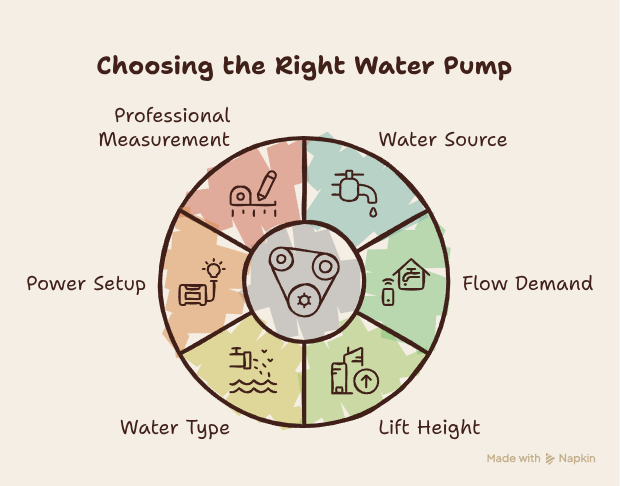
A pump should not work harder than needed. Too small, and it struggles. Too large, and it may cycle too often. The best choice depends on depth, distance, pipe size, and pressure needs. A professional can measure these details. That step protects your plumbing, water supply, and equipment life.
When Should You Choose a Centrifugal Pump?
A centrifugal pump uses spinning impellers to move water. It works well when you need steady flow from a source near the pump. It is common in many surface applications.
Types of Water Pump in this group often handle clean water transfer. They can move water for irrigation, pressure boosting, and general supply needs. Still, they may not fit deep wells. They need the right suction lift range. If the water sits too far below the pump, performance drops. You should also avoid dry running. A dry pump can overheat and fail. Proper priming and installation matter.
What Is the Difference Between Surface and Submersible Pumps?
Surface pumps sit outside the water source. Submersible units sit inside it. That one difference changes noise, depth limits, maintenance access, and pump performance.
| Pump Location | Best Use |
| Surface Pump | Shallow sources and easy access |
| Submersible Pump | Deep wells and submerged basins |
| Jet Pump | Shallow or some deep-well setups |
| Sump Pump | Basement or drainage pits |
| Transfer Pump | Moving water between locations |
A surface pump can work well when water sits nearby. It may also cost less to reach. A submersible model often works better for deeper water. It also stays protected from outdoor weather. If you need rural water access, the right choice may depend on well depth. A shallow source may use suction. A deep source usually needs a pump placed below the water line.
How Do Reciprocating Pumps and Rotary Pumps Work?
Reciprocating pumps move water with pistons, plungers, or diaphragms. They push a fixed amount each cycle. This can create steady pressure when flow needs tight control.
Some rotary pumps use gears and screws to move liquid. These pumps often fit special jobs better than normal home water supply. They can handle certain pressure needs or thicker fluids. For most homes, centrifugal, jet, sump, and well pumps matter more. Still, knowing the difference helps you ask better questions. If a contractor suggests a specialty pump, ask why. The answer should fit your water use, not just a product label.
Why Do Impellers and Float Switches Matter?
A pump’s internal parts affect performance. Impellers spin to move water in many pump designs. A damaged impeller can reduce flow, cause noise, or stop pumping fully.
- Impeller Condition: Clean blades help water move better.
- Float Switch Function: A switch controls automatic pump cycles.
- Vertical Float Switch: This saves space in smaller pump pits.
- Motor Health: A weak motor may hum or overheat.
- Check Valve Support: This helps stop water from flowing backward.
These parts matter because pumps often fail during demand. A sump pump may fail during rain. A well pump may fail during morning use. Types of Water Pump with automatic controls need clean movement. Stuck floats, worn impellers, and weak wiring can cause trouble. Regular checks help avoid sudden water loss or flooding.
What Pump Should You Use for Rural Water Access?
Rural homes often depend on wells. That means the pump must deliver steady pressure from underground water sources. The wrong pump can cause weak flow, air sputtering, and frequent cycling.
Types of Water Pump for wells often include jet and submersible models. Shallow wells may use jet pumps. Deep wells usually need submersible pumps. Your setup may also include a pressure tank, control switch, and safety wiring. In Central Wisconsin, cold weather and mineral-heavy water can add stress. A proper inspection helps find the real cause before replacing parts.
How Can You Pick the Right Pump Size?
Pump sizing matters as much as pump type. You need enough flow for your home. You also need enough pressure for showers, fixtures, appliances, and outdoor use.
The best size depends on distance, depth, elevation, pipe length, and household demand. You should also consider future use. A growing family may need more capacity. A new bathroom may increase demand. A shop, barn, or irrigation line can change the load too. Oversizing can cause short cycling. Undersizing can create poor pressure. The safest choice comes from real measurements, not guesses.
What Do Homeowners Ask About Water Pumps?
What are the main types of water pump systems?
The main choices include submersible pumps, jet pumps, sump pumps, centrifugal pump models, and specialty positive displacement pumps. Each one fits a different job. Your water source and pressure needs guide the choice.
Are submersible pumps better for wells?
Yes, submersible pumps often work well for deep wells. They sit inside the water source and push water upward. This makes them useful for many rural homes.
What does suction lift mean?
Suction lift means the vertical distance a pump must pull water upward. Surface pumps have limits. Deep water usually needs a different pump style.
Why do impellers matter in a pump?
Impellers help move water through many pump designs. If they wear out or clog, flow can drop. A noisy pump may also point to impeller trouble.
What pump helps with rural water access?
A well pump usually supports rural water access. The right type depends on well depth and demand. A plumber can test the system before replacement.
Should You Call Advantage Plumbing Plus About Types of Water Pump Options?
You should call when your water pressure drops, your pump runs often, or your well stops supplying water. Our team can inspect the issue and explain your best option.
Advantage Plumbing Plus serves Wausau and nearby Central Wisconsin areas. You get help from licensed local plumbers who understand wells, pressure tanks, sump pumps, water lines, and pump failure signs. We help you choose a pump that supports steady water, safe operation, and long-term value.
- Company Name: Advantage Plumbing Plus, LLC
- Phone Number: 715-359-7473
- Website Link: https://advantageplumbingplus.com/