
Hard water can leave spots, stains, and crusty buildup around your home. You may notice dry skin, dull dishes, weak soap lather, and tired-looking fixtures. These hard water issues can also affect pipes, heaters, and appliances over time. This guide helps you compare your choices before you spend money. Advantage Plumbing Plus helps Central Wisconsin homeowners choose a cleaner home water treatment setup with clear advice, skilled service, and lasting value.
What Should You Know Before Choosing a Hard Water System?
A Saltless Water Softener sounds simple, but the name can confuse you. Most systems do not remove hardness minerals. They condition minerals, so they stick less to surfaces.
Hard water contains calcium and magnesium, which cause spots, soap film, and scale buildup. A salt-free system may work as a helpful hard water solution when you want lower maintenance. It may also fit homes with brine restrictions. Still, it works differently from a traditional water softener. If mineral buildup already affects drains, pipes, or fixtures, you may need to fix plumbing issues before they get worse.
How Does a Salt Free Water Softener Actually Work?
Salt-free systems act more like conditioners. They change how hardness minerals behave inside your water lines. They do not pull minerals out. That difference matters because your water may still leave some spots after drying.
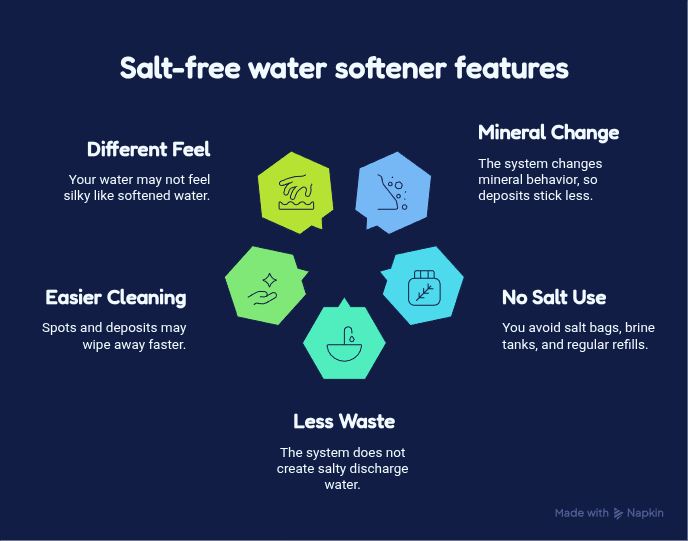
- Mineral Change: The system changes mineral behavior, so deposits stick less.
- No Salt Use: You avoid salt bags, brine tanks, and regular refills.
- Less Waste: The system does not create salty discharge water.
- Easier Cleaning: Spots and deposits may wipe away faster.
- Different Feel: Your water may not feel silky like softened water.
I often explain it this way. A conditioner helps manage minerals. A softener removes them. That small difference changes your results. If your water heater already pops, rumbles, or heats slowly, mineral deposits may play a role. You can protect your hot water system early before a small issue becomes expensive.
Why Does Hard Water Cause Scale Buildup in Your Home?
A Salt Free Water Softener can help manage minerals before they cling to plumbing surfaces. Hard water forms when water passes through mineral-rich soil, stone, and underground layers. It picks up calcium and magnesium before reaching your home.
| Hard Water Sign | What It May Mean |
| White spots | Minerals remain after water dries |
| Crusty faucets | Deposits collect around fixtures |
| Soap film | Detergent struggles to rinse clean |
| Heater noise | Minerals may collect inside tanks |
| Dull laundry | Hardness may affect washing results |
You may see these problems near sinks, showers, tubs, dishwashers, and water heaters. A real hard water solution should match your water test, not a guess. Some homes need conditioning. Some homes need softening. Others may need filtration too. Your best option depends on hardness level, water source, home size, and daily water use.
What Are the Salt Free Water Softener Pros and Cons?
Every water treatment system has tradeoffs. You should understand them before installation. Some homeowners want simple care. Others want true soft water. Your best choice depends on your goals, budget, and current hard water issues.
- Low Maintenance: You avoid salt refills and brine tank checks.
- No Brine Waste: You reduce salty drain discharge concerns.
- Scale Support: You may reduce sticky mineral deposits.
- Minerals Stay: Your water still contains hardness minerals.
- Different Water Feel: You may not feel classic soft water comfort.
These water softener pros and cons affect daily life. If you want less cleaning, a conditioner may help. If you want softer laundry, better soap lather, or smoother skin, compare your options carefully. I always suggest testing first. A water test for hardness helps you avoid guesswork. It shows if you need conditioning, softening, filtration, or a combined setup.
When Should You Get a Water Test for Hardness?
A Salt Free Water Softener should not be your first guess. Your first step should be testing. A water test for hardness shows how much mineral content your water carries. It can also reveal iron, sediment, or other water concerns.
Testing matters even more if you use well water. Central Wisconsin homes can have different water conditions by neighborhood, road, or property. One home may have mild hardness. Another may have heavy mineral content nearby. Testing helps you choose equipment that fits your home. It also prevents wasted money. You get clear answers before installation, not regret after the system starts running.
Which Option Works Better Than a Traditional Water Softener?
A traditional water softener removes hardness minerals through ion exchange. A Salt Free Water Softener conditions those minerals instead. That difference affects water feel, cleaning power, appliance care, and long-term expectations.
| Feature | Salt-Free Conditioner | Traditional Softener |
| Uses salt | No | Yes |
| Removes hardness | No | Yes |
| Helps with scale | Often, yes | Yes, more directly |
| Needs brine tank | No | Yes |
| Water feel | Usually unchanged | Softer and slicker |
You should choose based on your top goal. If you dislike salt refills, a conditioner may appeal to you. If you want true soft water, a softener may fit better. If your home has stains, odors, or sediment, you may need more than one system. The right choice starts with water data. It should never rely only on product claims.
How Much Salt Free Water Softener Maintenance Should You Expect?
Most systems need simple care. You do not add salt. You do not clean a brine tank. Still, salt-free conditioner maintenance matters if you want steady results and long equipment life.
- Filter Checks: Replace pre-filters when your setup uses them.
- Media Review: Ask when the media needs replacement.
- Flow Watch: Notice pressure drops at sinks and showers.
- Fixture Check: Watch for a fast return of white deposits.
- Retesting: Test again if water quality changes.
Most homeowners like the easier routine. Still, you should not ignore the system. A neglected unit can lose value. Your plumbing, heater, and fixtures give helpful clues. If spots return fast, ask a plumber to inspect the setup. Small checks can prevent weak results, mineral stress, and early equipment failure.
Can This System Solve All Hard Water Issues?
No single system fixes every water concern. A Salt Free Water Softener may reduce sticky deposits. It may also make cleaning easier. Yet it will not remove hardness minerals from your supply.
You may not notice better soap lather. You may not see spotless glass after every wash. Your skin may still feel dry if hardness stays high. This is why your goals matter. If your main issue is scale buildup, conditioning may help. If your main issue is comfort, softening may work better. A licensed plumber can help you compare both options clearly.
How Can You Find the Best Salt-Free Water Conditioner?
The best salt-free water conditioner starts with real water facts. You need to know your hardness level, water source, home size, and flow demand. A larger home needs different sizing than a small one.
| Buying Point | Why It Matters |
| Hardness level | Shows if conditioning makes sense |
| Flow rate | Helps protect water pressure |
| Water source | City and well water can differ |
| Family size | Higher use needs better capacity |
| Service access | Local support helps long-term care |
You should also review product claims with care. Some brands make salt-free systems sound like full softeners. That can mislead you. Ask direct questions before buying. Will it remove minerals? Will it change water feel? Will it help your water heater? Clear answers help you choose with confidence and avoid a poor fit.
Why Do Brine Restrictions Matter for Some Homes?
A Salt Free Water Softener can help when salty discharge creates concerns. Some places limit brine waste because salty discharge can affect septic systems, sewer systems, or local water rules. This makes salt-free treatment appealing.
You may also prefer salt-free care for personal reasons. You may dislike lifting heavy bags. You may want less wastewater. You may want a system that runs without regeneration cycles. Those are fair goals. Still, you should balance convenience with results. A conditioner can be smart, but only when it matches your water and expectations.
Is Salt-Free Treatment Worth It for Central Wisconsin Homes?
Hard water affects many Wisconsin homes. You may see mineral film on faucets, stains on glass, or buildup around showerheads. A Salt Free Water Softener can reduce cleaning stress in the right home.
The value depends on your water hardness. It also depends on your goals. If you want less maintenance, this option may fit. If you want true soft water, compare carefully. Advantage Plumbing Plus can help you test, review, and plan. You get local guidance from plumbers who understand wells, heaters, fixtures, and Central Wisconsin plumbing conditions.
What Do Homeowners Ask About Salt-Free Water Systems?
Does a salt-free system remove calcium and magnesium?
No, it does not remove calcium and magnesium. It changes how those minerals behave. They stay in your water after treatment.
Is salt-free treatment a true hard water solution?
It can be a helpful hard water solution for scale control. It may not solve every comfort issue. Testing helps confirm if it fits your home.
Can salt-free systems stop scale buildup completely?
They may reduce scale buildup, but they may not stop it fully. Minerals can still remain in your water. You may still need normal cleaning.
Is a traditional water softener better?
A traditional water softener works better for true soft water. It removes hardness minerals. Salt-free systems offer easier care and less waste.
How often do I need salt-free conditioner maintenance?
Most systems need simple salt-free conditioner maintenance. You may need filter checks, media review, and occasional inspection. Your system type sets the schedule.
Should You Call Advantage Plumbing Plus for a Salt Free Water Softener?
You should call when hard water keeps causing stains, spots, or buildup. Our team can test your needs and explain your options clearly.
Advantage Plumbing Plus serves Wausau and nearby Central Wisconsin areas. You get honest help from licensed local plumbers. We help you compare softeners, conditioners, and water treatment choices. We also check related plumbing concerns, so your home gets a practical long-term fix.
- Company Name: Advantage Plumbing Plus, LLC
- Phone Number: 715-359-7473
- Website Link: https://advantageplumbingplus.com/